
Sean Farrugia | Garmin Malta Retail Store Manager | Triathlete with 8+ years in endurance sports
The Common Dilemma
Let’s be honest running isn’t just about pounding the pavement and hoping for the best. It’s about understanding how your body works and making sure you don’t push it past its limit (hello, sore muscles the next day!). One of the best ways to do that? Heart rate tracking. Knowing how hard your heart is working can help you push just the right amount, not too little, not too much and make every run count.
Sure, many smartwatches and fitness trackers come with built-in heart rate sensors, but let’s face it, they sometimes get a little… creative with their readings. If you want something more reliable, that’s where the chest strap heart rate monitor (HRM) comes in. Think of it as the real deal like the difference between using a rubber stamp and a laser printer. It’s precise, reliable, and gives you the full picture of your workout. . no guesswork involved.
Why Heart Rate Matters for Runners
Your heart rate isn’t just a number – it’s your body’s way of telling you how much effort you’re putting in. By paying attention to it, you can:
- Build endurance in your aerobic zones.
- Ensure your recovery runs stay relaxed (instead of accidentally turning into speed sessions).
- Push yourself during interval training without hitting the red zone.
- Avoid overtraining, because no one enjoys being sidelined by burnout.
Heart rate training helps you find that sweet spot between effort and recovery, giving you the best results without overworking yourself.
Chest Straps vs. Wrist Sensors: Who Wins?
Wrist-based heart rate monitors are convenient, but let’s face it they’re not always the most reliable companion. Here’s why chest straps are a step (or stride) ahead:
- Accuracy
- Chest Straps: These measure your heart’s electrical signals directly, making them incredibly precise – no matter how fast or intense your workout is.
- Wrist Sensors: These use light to detect blood flow, but their accuracy can drop because of:
- Skin Tone: Darker tones can interfere with the light sensors.
- Tattoos: Ink can be the ultimate “No Entry” sign for these sensors.
- Sweat: Excessive sweat can confuse wrist sensors, making them less reliable during heavy workouts.
- Responsiveness
- Chest Straps: They respond to heart rate changes almost immediately, which is perfect for sprints or interval training.
- Wrist Sensors: These can lag behind, making it harder to track quick intensity shifts accurately.
- Reliability
- Chest Straps: Once strapped on, they work consistently, regardless of how much you’re sweating or how wildly your arms are moving.
- Wrist Sensors: They can struggle with erratic arm movement, vibrations, or an imperfect fit – basically, anything that isn’t smooth.
Why a Chest Strap HRM Is Worth It?
Here’s what makes a chest strap HRM a smart investment for runners:
- Pinpoint Accuracy: Reliable data means no second – guessing your heart rate during a run.
- Extra Features: Some chest straps offer advanced metrics like heart rate variability (HRV), and running dynamics.
Garmin HRM Chest Strap Comparison
- HRM-Dual
- Transmission: Supports ANT+ and Bluetooth Smart, ensuring compatibility with a wide range of devices.
- Design: Basic design without advanced features.
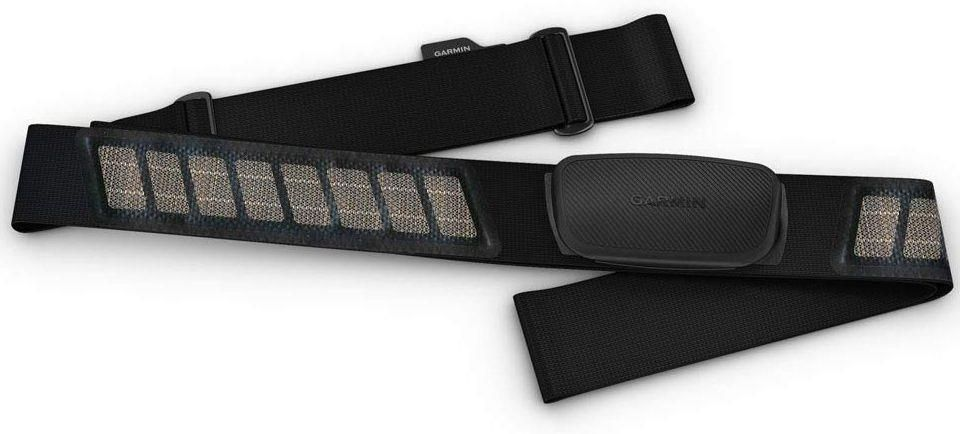
- HRM-200
- Transmission: Supports ANT+ and Bluetooth Smart with a secure Bluetooth connection.
- Design: Features a child-safe battery compartment and a built-in tool for easy battery replacement. Available in two sizes.
- Additional Features: Includes a battery indicator and wake-up button to ensure the monitor is active before use.

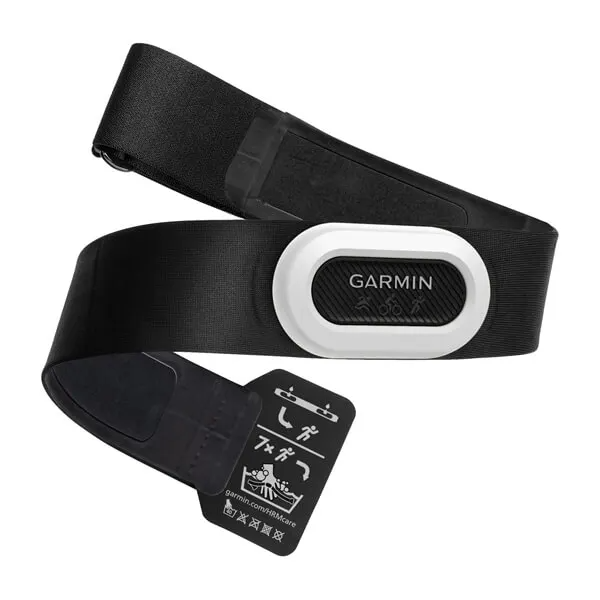
- HRM-Pro Plus / HRM-Fit
- Transmission: Supports ANT+ and Bluetooth Smart.
- Design: The HRM-Pro Plus includes advanced features like running dynamics, indoor pace/distance tracking, and offline storage for activities like swimming. The HRM-Fit is designed specifically for women, offering a smaller strap size and contoured design for comfort when attached to a sports bra.
- Additional Features: Offers advanced metrics and is designed for athletes seeking detailed performance data.
- Note: Ensure that your Garmin watch is compatible with running dynamics to utilize this feature.

Final Thoughts
Whether you’re training for your first 5K, chasing a marathon PR, or simply running to clear your head, a chest strap heart rate monitor can help you level up. It’s a practical tool that provides reliable data to train smarter and recover better. . because who doesn’t want to feel like a pro, even if you’re just running to the fridge?
While wrist sensors are fine for casual use, serious runners will appreciate the accuracy and consistency of a chest strap especially when factors like skin tone, tattoos, or sweat can throw off wrist-based readings.
So, if you’re ready to ditch the guesswork and get serious about your training, a chest strap HRM might just become your new favorite training buddy. Unlike your running shoes, it won’t wear out anytime soon – unless, of course, you forget to wash it after a long run.
Talking about washing it, I’m sure the admin here will allow me to add this: If you’re coming to me for a battery change, make sure you give your HRM a good rinse. Yes, everybody’s sweat stinks, haha!
Leave a Reply