
As a runner, it is incredibly easy to obsess over weekly mileage, lactate thresholds, and the latest carbon-plated shoes. However, if you are looking for the most scientifically proven way to boost your endurance and bulletproof your body against injuries, the answer doesn’t lie in your training log, it lies in your bed.
Recent sports science has radically shifted how we view recovery. Sleep is no longer considered a passive period of inactivity; it is a highly active, critical “regenerative window.” Based on the latest clinical data and studies from 2024 and 2025, here is the hard science on why sleep is the most vital component of your running protocol.
The Molecular and Physiological Mechanisms of Recovery
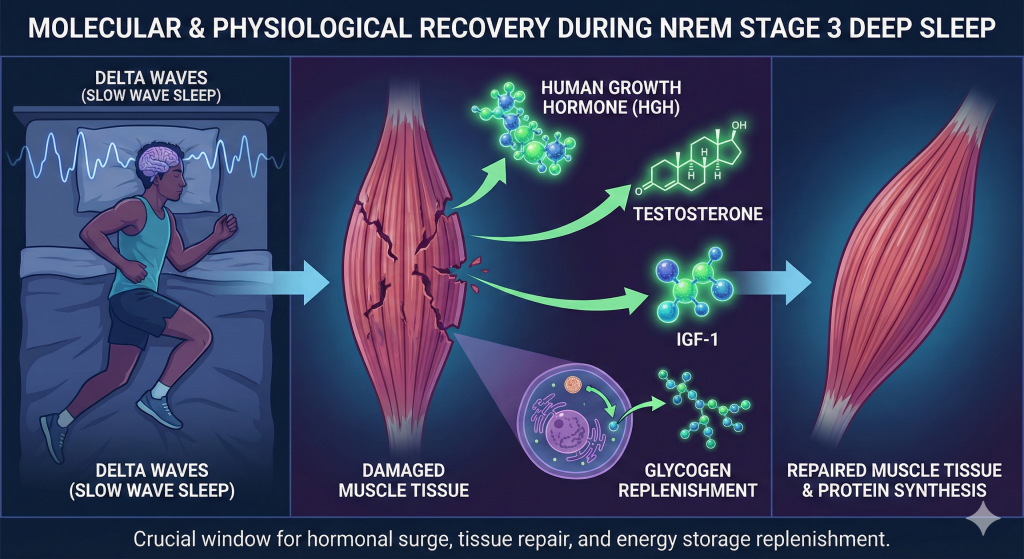
To understand why sleep is so crucial, we have to look at what happens at the cellular level when your head hits the pillow. A comprehensive 2024/2025 multidimensional review published in MDPI highlights that sleep architecture provides the optimal and completely necessary conditions for hormonal and anabolic processes.
- The Anabolic Surge: During deep sleep (NREM Stage 3), your body experiences a massive surge in Human Growth Hormone (HGH), testosterone, and Insulin-like Growth Factor 1 (IGF-1). These are the specific hormones required for tissue repair, protein synthesis, and muscle growth.
- The Catabolic Danger: Even a single night of sleep deprivation can reduce testosterone levels by nearly 25%. Chronic sleep restriction promotes a catabolic state where elevated cortisol (a stress hormone) actually accelerates protein breakdown and actively hinders your recovery.
- Inflammation and Glycogen: Inadequate sleep upregulates pro-apoptotic (cell death) genes and exacerbates pro-inflammatory markers like IL-6 and CRP, delaying the healing of micro-tears in your muscles. Furthermore, sleep loss severely impairs your body’s ability to restore muscle glycogen, meaning you start your next run with a partially empty tank.
The following infographic illustrates the vital recovery processes that occur during deep sleep.
The Sleep-Injury Connection: The 2025 Data
For years, coaches have warned that poor sleep leads to injuries, but recent prospective studies have finally quantified exactly how dangerous sleep deprivation is for runners. The data is staggering.
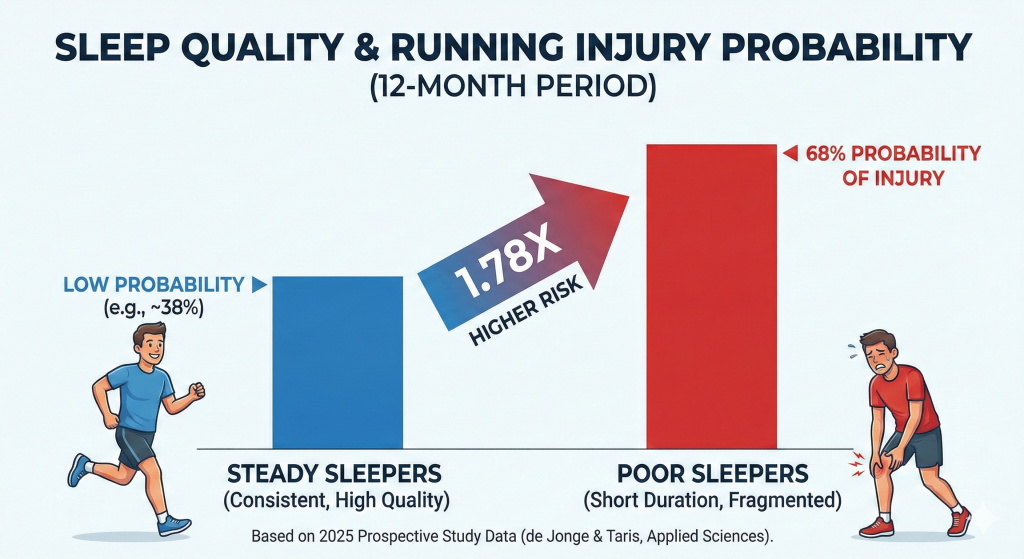
- The 68% Injury Probability: A landmark 2025 study by de Jonge and Taris published in Applied Sciences tracked the sleep patterns and injury rates of 425 recreational runners. They found that “Poor Sleepers”, those suffering from short duration, low quality, and fragmented sleep, were 1.78 times more likely to report running-related injuries than steady sleepers. In fact, this group had a massive 68% probability of sustaining an injury over a 12-month period.
- Quality Over Quantity: A separate 2025 prospective study by Goldberg et al., published in the Scandinavian Journal of Medicine & Science in Sports, followed 339 runners over six months. The researchers discovered that lower sleep quality (independent of just the number of hours slept) was directly associated with an increased risk of running-related injuries (RRI). The study noted that an increase in morning muscle soreness and fatigue after poor sleep serves as an early warning sign of impending injury.
This infographic visually represents the dramatic increase in injury risk associated with getting poor quality sleep.
Sleep Extension: Banking Rest to Run Faster
Sleep isn’t just a defensive shield against injuries; it is an active performance enhancer.
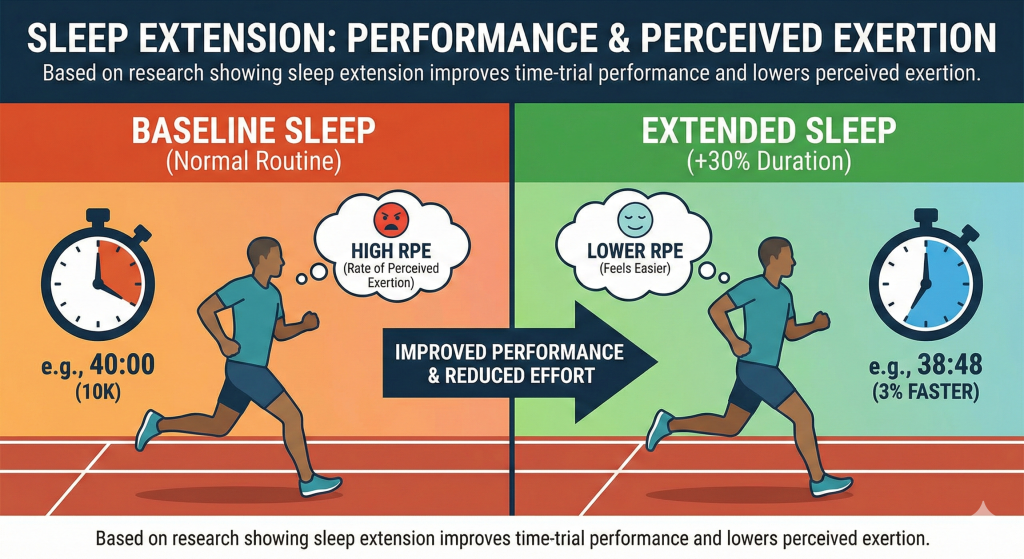
Sports scientists have recently focused on the concept of sleep extension deliberately sleeping more than your baseline to “bank” rest before heavy training blocks or races. Research published in Medicine & Science in Sports & Exercise demonstrated that when endurance athletes extended their sleep by roughly 30% over just a few consecutive nights, they saw a 3% improvement in time-trial finishing times.
More importantly, the athletes’ Rate of Perceived Exertion (RPE) dropped. By simply sleeping more, the runners not only ran significantly faster, but the physical effort actually felt easier to them.
The image below visualizes the before-and-after effect of sleep extension on performance and perceived exertion.
Evidence-Based Sleep Protocols for Runners
To translate this science into your daily routine, consider the following evidence-based protocols:
Monitor Your Readiness: Pay attention to fragmented sleep and morning fatigue. If your sleep quality drops, the 2025 literature suggests your tissues are less tolerant of training loads. This is the time to swap a high-intensity interval session for an easy recovery run.
- Target the Athlete’s Minimum: While the general population might survive on 7 hours, a 2025 meta-analysis confirmed that athletes who sleep less than 7 hours have a significantly higher injury risk (OR = 1.34). If you are in a heavy training block, aim for 8 to 10 hours to support the required physiological repair.
- Optimize the Sleep Regularity Index (SRI): It is not just about duration; it is about consistency. Going to bed and waking up at the exact same time every day even on weekends anchors your circadian rhythm, dramatically improving your sleep efficiency and time spent in deep, restorative N3 sleep.
References
- de Jonge, J., & Taris, T. W. (2025). Sleep Matters: Profiling Sleep Patterns to Predict Sports Injuries in Recreational Runners. Applied Sciences, 15(19), 10814.
- Goldberg, A., et al. (2025). Poor Sleep Quality Is Associated With an Increased Risk of Running-Related Injuries: A Prospective Study of 339 Runners Over Six Months. Scandinavian Journal of Medicine & Science in Sports, 35(11).
- Roberts, S. S. H., et al. (2019). Extended Sleep Maintains Endurance Performance Better than Normal or Restricted Sleep. Medicine & Science in Sports & Exercise, 51(12), 2516-2523. (Foundation study for endurance sleep extension).
- Piotrowicz, Z., et al. (2024/2025). Sleep and Athletic Performance: A Multidimensional Review of Physiological and Molecular Mechanisms. MDPI.
Leave a Reply