
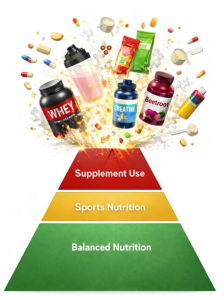
When many athletes think about sports nutrition, supplements often come to mind first. Powders, pills, gels and drinks often steal the spotlight. In reality, supplements sit at the very top of the sports nutrition triangle.
They can only provide a benefit when the foundations are already in place: adequate energy intake, appropriate carbohydrate, protein and fat intake, good hydration, and correct nutrition timing to support training, competition and recovery.
Without these foundations, supplements will not compensate for poor or inconsistent nutrition. When the basics are in place, some evidence-based supplements can provide a small but meaningful performance edge.
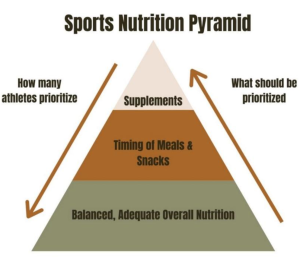
Supplements for Deficiency (Medical Nutrition First)
Before considering performance supplements, nutrient deficiencies must be addressed. These are not optional extras – correcting deficiencies is essential for health, training capacity and performance.
Deficiency supplements should:
- Be taken on medical or dietetic advice
- Ideally follow blood testing
- Be reviewed regularly rather than taken indefinitely
Common Deficiencies in Athletes
- Iron
- Particularly common in endurance athletes and female athletes
- Low iron can impair oxygen transport, performance and recovery
- Supplementation should only be started following blood tests
- Dosage and duration depend on severity and tolerance
- Vitamin D
- Important for bone health, muscle function and immune health
- Low levels are common, especially in winter, indoor athletes or darker-skinned athletes
- Supplementation is often required but should be guided by blood results
- Calcium
- Essential for bone health and muscle contraction
- Inadequate intake can increase risk of stress fractures
- Food-first approach preferred, with supplements used when intake is insufficient
Correcting deficiencies supports health and training quality but does not provide a “performance boost” beyond normal function.
Ergogenic Supplements: Evidence-Based Options for Runners
Once nutrition is consistent and deficiencies are addressed, ergogenic aids may help improve performance. These supplements mentioned below have strong scientific evidence when used correctly.
- Caffeine
- Benefit
- Improves endurance, focus, decision-making, reaction time and perceived effort
- Best for
- Endurance runners, middle-distance runners, team sport athletes
- Dose
- ~1-3mg/kg body weight
- Taken ~60 minutes before exercise or divided in doses during long distancen events or towards the end of a long-distance event when fatigue starts setting in
- These lower doses have been found to be effective and reduce side effects such as anxiety or insomnia
- Sources
- Coffee, caffeine gels, chews, tablets or de-fizzed cola drinks
- Benefit
- Nitrates (Beetroot Juice)
- Benefit
- Improves exercise efficiency and oxygen use
- Best for
- Endurance runners and middle-distance athletes
- Dose
- ~6-8 mmol (~350–500mg) per day
- Taken 2–3 hours before exercise or daily for 3–7 days before competition.
- Sources
- Beetroot shots
- Tip
- Avoid using antibacterial mouthwash before taking this supplement since the mouthwash destroys certain enzymes present in the mouth which are essential to make this supplement effective
- Benefit
- Creatine
Often misunderstood as “just for strength athletes”, creatine can be beneficial for runners too.- Benefit
- Improves high-intensity performance
- Supports training quality
- Enhances muscle recovery and lean mass
- Best for
- Sprinters, middle-distance runners, and endurance runners during strength phases
- Dose
- 3–5g per day
- Taken consistently long-term (timing is not critical)
- Best taken together with a source of protein and carbohydrate
- Benefit
- Sodium Bicarbonate
- Benefit
- Buffers acid buildup in bloodstream during high-intensity efforts
- Best for
- Short sprints (1–7 minutes), track events, interval training
- Dose
- ~0.2–0.3g/kg body weight
- Taken 60–180 minutes pre-exercise
- Or taken using a chronic loading protocol over 3-7 days
- Caution
- High risk of gastrointestinal distress (including nausea and vomiting, diarrhoea, and stomach upset)
- Trial well away from competition
- Benefit
- Beta-Alanine
- Benefit
- Increases buffering capacity inside the muscle
- Best for
- Similar events to bicarbonate: middle-distance, repeated high-intensity efforts
- Dose
- 3–6g per day
- Taken daily for at least 4 weeks
- Notes
- Tingling sensation is harmless but can be uncomfortable. Slow-release tablets may help to decrease this tingling
- Benefit
Sports Foods: Practical Performance Support
Not all “supplements” come in pill form. Some “supplements” (sports foods) are simply convenient nutrition tools which can be highly effective when used appropriately.
- Protein Powders
- Convenient way to meet protein needs
- Useful post-training, when appetite is low, or food is unavailable
- Not superior to food, just practical
- Carbohydrate Drinks, Gels, Chews and Bars
- Support fuel intake during long or intense sessions and races
- Improve performance in sessions lasting >60 minutes
- Help athletes meet high carbohydrate targets
These products support fuelling strategies, not replace everyday nutrition.
Choosing Supplements Safely: Reducing Doping Risk
One of the biggest risks with supplements is contamination. Even legal supplements can contain banned substances due to poor manufacturing practices.
- Third-Party Tested Products
To decrease doping risk, athletes should choose products which are third-party tested such as:- Informed Sport
- Informed Choice
What is the Difference?
| Informed Sport | Informed Choice |
 |  |
| Every single batch is tested | At least one batch is tested every month to provide assurance the product is safer |
| Appropriate for elite and tested athletes | Suitable for recreational athletes |
No supplement is 100% risk-free, but third-party testing significantly reduces the risk. Athletes should always be aware that they are responsible for any substance found in their bodies.
A note on Age
This advice applies to adult athletes. The use of ergogenic supplements is not recommended for adolescents, as performance and development needs can be met through a balanced, well-planned diet. This does not include supplements prescribed for diagnosed deficiencies under medical supervision, or the use of carbohydrate sources such as sports drinks, gels or chews during prolonged exercise when normal food intake is not practical.
Key Take-Home Messages
- Supplements are the tip of the sports nutrition triangle
- Foundations always come first: energy, macros, hydration and timing
- Deficiency supplements support health, not performance enhancement
- A small number of ergogenic aids are evidence-based and effective
- Supplements should always be trialled in training, not introduced on race day
- Choose third-party tested products to reduce doping risk
Eat smart. Run strong. Fuel Your Sport Performance.
Stay tuned for another sport nutrition topic next month!

Written by Roberta Zarb Adami, Registered Dietitian and Nutritionist and IOC-certified Sport Nutrition specialist.
Helping runners and athletes — from committed amateurs to elite athletes — fuel smarter, perform better, and recover faster.
Learn more or get personalised advice at:
Facebook: Fuel Your Sport Performance
Instagram: Fuel Sport Performance
Leave a Reply