After exploring the basics of fuelling, energy needs, carbohydrates and hydration in the first few blogs of this series, it is time to focus on a nutrient that doesn’t always get enough attention in the running world — protein.
Many runners still associate protein mainly with strength athletes or gym-goers, but protein is just as essential for endurance runners. From supporting recovery and muscle repair to protecting bone health and immune function, getting enough protein every day is key to staying strong, healthy, performing at your best and helps you bounce back stronger after every run.
Why Protein Matters for Runners
Every run, especially long or intense sessions, creates tiny amounts of muscle damage. This is normal — it is how the body adapts to training. But to repair, rebuild and come back stronger, your body needs the amino acids (building blocks) that come from protein.
Getting enough protein helps:
- Speed up recovery between runs and hard workouts
- Reduce muscle breakdown during long-distance efforts helping you maintain lean mass and endurance capacity
- Support bone health particularly when combined with calcium
- Enhance training adaptation, making you stronger and more efficient over time
- Prevent injury by maintaining lean tissue and connective structures
- Protects immune function, helping you stay healthy during heavy training blocks
How Much Protein Do You Need?
The general health advice of “0.8 g/kg” guideline doesn’t cut it for active runners. Endurance athletes should aim for 1.2–2.0g protein per kilogram of body weight per day, depending on training load and goals.
| Training Phase / Type | Protein (g / kg / day) | Example (60 kg runner) |
| Moderate endurance | 1.4-1.6 | 84-96 g |
| High-volume endurance | 1.6-1.8 | 96-108 g |
| With strength/gym work | 1.8-2.0 | 108-120 g |
| Injury or calorie deficit | 1.8-2.2 | 108-132 g |
➡ Increase protein intake during heavy mileage, strength phases, or when trying to improve body composition.

Timing Is Everything
It’s not just about how much protein you eat — it’s about when you eat it. Aim for 0.3 g/kg every 3–4 hours (roughly 15–25 g per meal or snack). This keeps amino acids available to repair muscle throughout the day.
Example:
- Breakfast: Milk or yogurt with oats, or eggs on toast
- Lunch: Chicken sandwich or lentil bowl
- Dinner: Fish with rice or tofu stir-fry
- Snacks: Greek yogurt, cheese, or a smoothie
Protein Around Competition
The Night Before
- Include a moderate portion of lean protein (e.g. chicken, fish, eggs, tofu) with your carb meal.
- Avoid very high-fat or heavy meals that slow digestion.
Pre-Event (2-4 Hours Before)
- Include 10–20 g of protein (e.g. milk, yogurt, eggs, or nut butter).
- Add a calcium-rich source like milk or yogurt — calcium supports muscle contraction and helps protect bones from calcium losses through sweat during long runs.
During the Event
- For runs around 2 hours: protein is not needed.
- For ultras or stage races: small amounts (5–10 g/hour) can reduce muscle damage and fatigue. Try peanut butter and jam sandwiches, jerky or small bites of protein bars.
After the Event
Within 30–60 minutes:
- 0.3 g/kg protein + 1 g/kg carbs
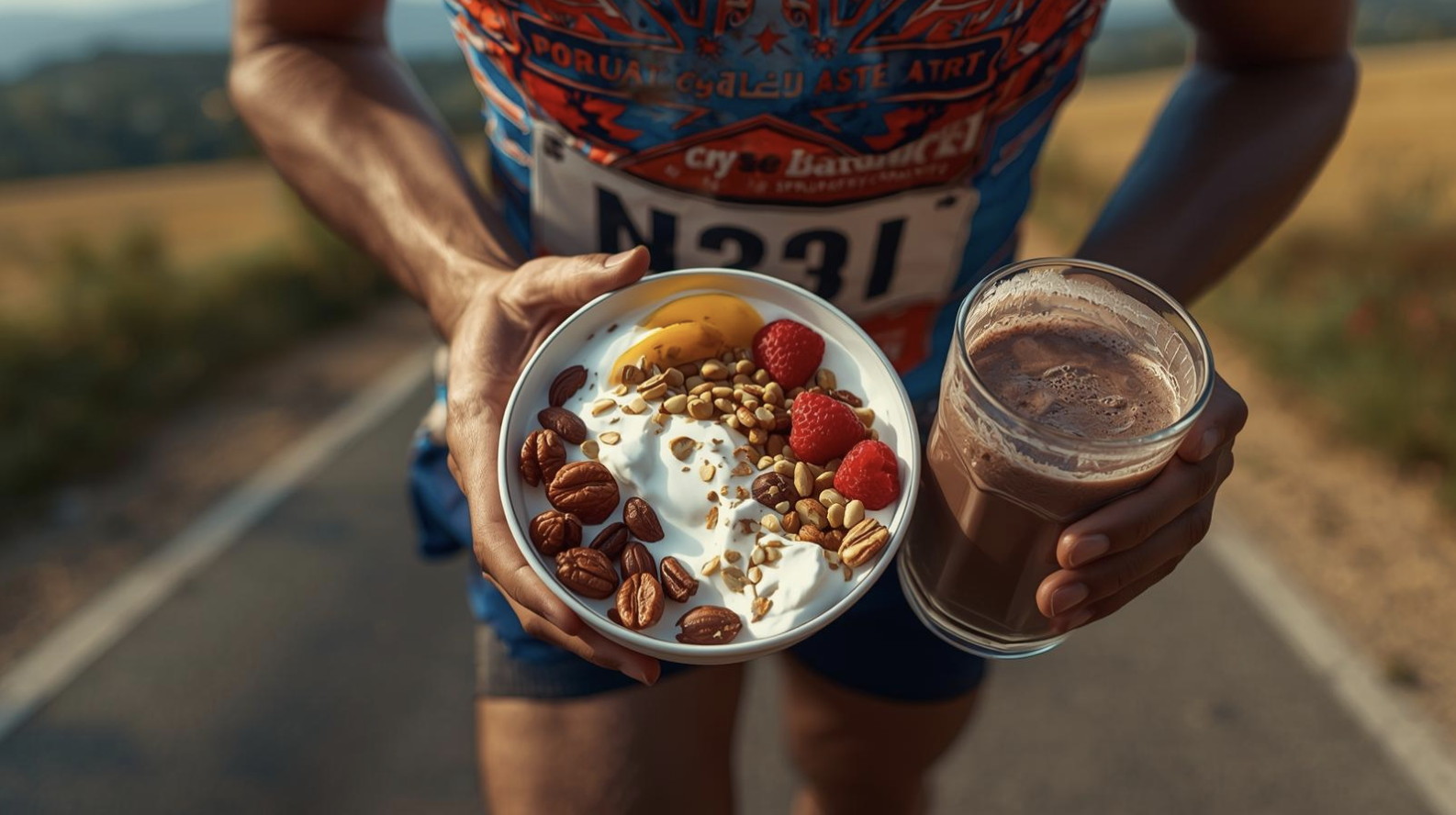
- Ideal examples: chocolate milk, recovery smoothie, yogurt with fruit, or a chicken wrap.
- This combo restores glycogen and triggers muscle repair.
Leucine: The Recovery Trigger
One amino acid stands out for recovery — leucine.
Leucine acts as the “on switch” for muscle protein synthesis, the body’s repair process after exercise.
You need about 2–3 g leucine per meal to trigger this response.
Best Sources of Leucine:
- Dairy proteins — whey, milk, Greek yogurt, cheese
- Eggs and lean meats
- Soy and legumes
That is why dairy foods are such effective recovery options — they provide both high-quality protein and leucine, plus calcium for bone and muscle health.
Protein for Ultra and Multi-Day Events
Ultra-distance and multi-day runners face higher amino acid oxidation — your body starts using protein as an energy source.
To limit muscle loss:
- Include small protein portions every few hours during the event (e.g. peanut butter and jam sandwiches, jerky or small bites of protein bars).
- After each stage, continue 20–25 g protein every 3–4 hours for optimal recovery.
Protein and Strength Training
Adding gym or resistance sessions?
Then increase your intake on those days to 1.8–2.0 g/kg/day.
A post-gym snack with 20–25 g protein within 1–2 hours (like yogurt, eggs, or a shake) enhances muscle adaptation and supports running economy.
More strength = better efficiency, speed, and injury resilience.
Food First — Supplements Second
Whole foods should always be your foundation.
Top Protein-Rich Foods:
- Animal: eggs, fish, chicken, dairy, lean meat
- Plant: tofu, soy milk, lentils, beans, quinoa, nuts
- Combine plant proteins (e.g. rice + beans) for a complete amino acid profile.
When convenience matters, supplements can help — just make sure they are Informed Sport–certified for safety.
Supplement Types:
- Whey protein: fast-digesting, high leucine — perfect post-run
- Casein protein: slow-release — great before bed
- Plant blends (soy, pea, rice) — vegan option
Protein Before Bedtime
Muscle recovery continues while you sleep.
Having 20–30 g of slow-digesting protein (like casein) before bed helps stimulate overnight muscle repair.
Best options:
- Greek yogurt with berries and nuts
- Cottage cheese on toast
- A glass of milk or a casein shake
This strategy is especially useful during heavy training blocks or injury rehab.
Sample Daily Protein Intakes
| Runner Weight | Daily Target | Example Day |
| 50 kg | 75-90 g | Breakfast: Oat + Milk (15 g) Lunch: Chicken Wrap (25 g) Dinner: Fish + Rice (25 g) Snack: Yogurt (10 g) |
| 60 kg | 90-110 g | Breakfast: Eggs + Toast (20 g) Lunch: Lentil Bowl (25 g) Dinner: Tofu Stir-Fry (25 g) Snack: Recovery Smoothie (20 g) |
| 70 kg | 100-125 g | Breakfast: Yogurt + Fruit (20 g) Lunch: Tuna Sandwich (25 g) Dinner: Salmon + Quinoa (30 g) Snack: Bedtime milk (20 g) |
Key Takeaways
- Protein supports recovery, strength, and endurance.
- Spread intake evenly across the day and refuel after every workout.
- Leucine-rich dairy foods are the gold standard for muscle repair.
- Include calcium in your pre-event meal to protect bones and muscles.
- Increase intake during heavy training, injury, or fat-loss phases.
- Use food first, supplements only when needed.
- A bedtime protein snack boosts overnight recovery.
Remember always practice everything in training.
Eat smart. Run strong. Fuel Your Sport Performance.
Stay tuned for another sport nutrition topic next month!

Written by Roberta Zarb Adami, Registered Dietitian and Nutritionist and IOC-certified Sport Nutrition specialist.
Helping runners and athletes — from committed amateurs to elite athletes — fuel smarter, perform better, and recover faster.
Learn more or get personalised advice at:
Facebook: Fuel Your Sport Performance
Instagram: Fuel Sport Performance
Leave a Reply